Free Worldwide Shipping | Subscribe to Our Newsletter for 10% Off Your First Order

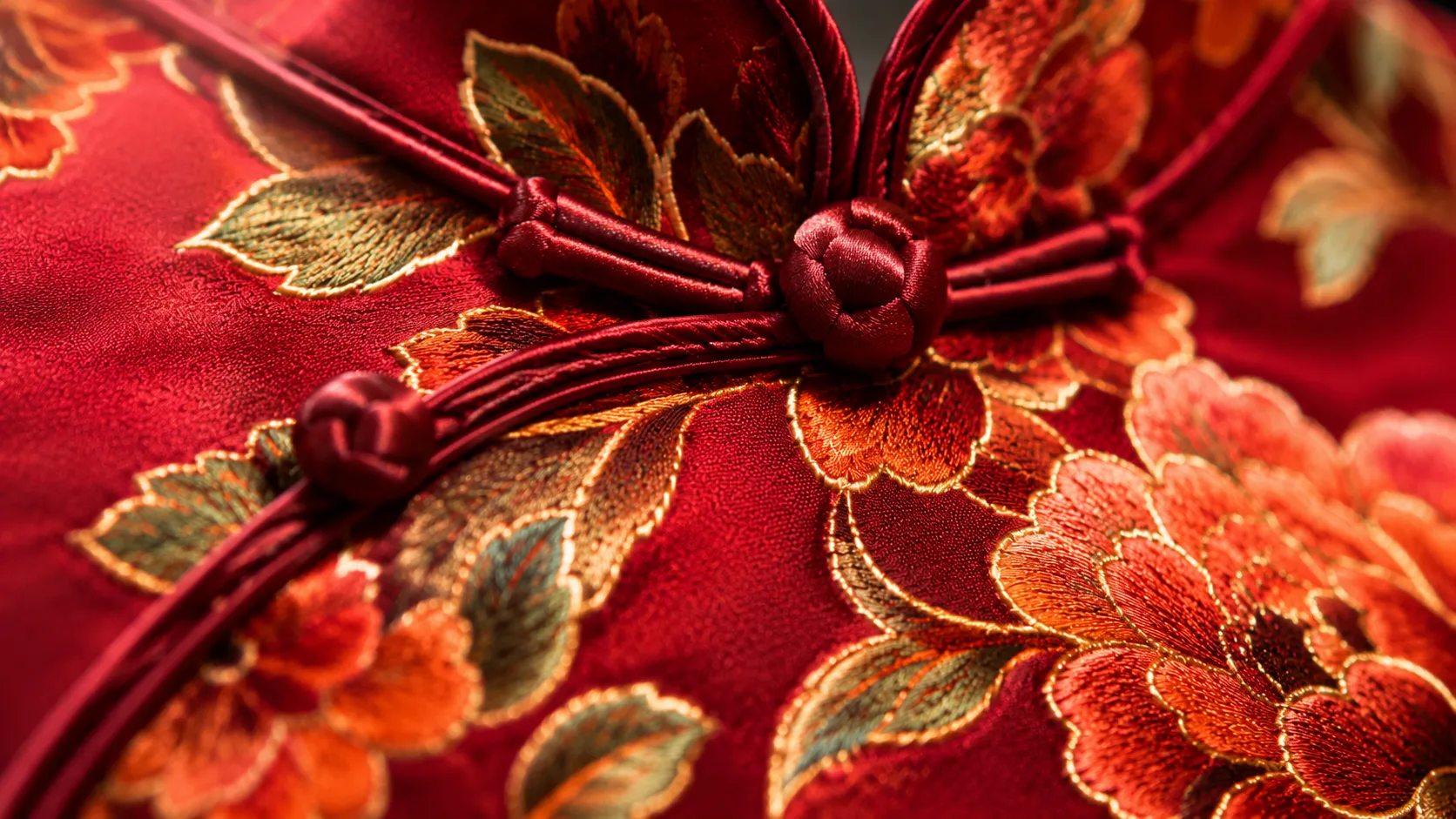

Buying a qipao you love is only the first step. The real challenge is keeping its drape and sheen intact over time. Many people simply toss it into the washing machine after wearing it, only to end up with shrinkage, distortion, or even loose embroidery on expensive pieces. Qipao fabrics are delicate. Whether the dress is made of silk, satin, or heavily embellished with beading, the logic behind cleaning and care is very different. This article explains how to wash common qipao materials, what to avoid, and practical storage tips to help prevent mold, yellowing, and shape loss.
Quick Care Overview
- Dry cleaning first: silk, heavy embroidery, and styles with extensive beading.
- Cold water hand wash: cotton and linen, faux silk, and regular satin styles without complex embellishments.
- Absolutely avoid: wringing hard, machine spin drying, direct sunlight, and alkaline detergents.
- Hanging tips: use a wide shoulder hanger with sponge padding. Knitted styles or heavily constructed pieces should be stored flat to prevent distortion.
Check the Care Label First: Understand Fabric and Craft Risks
Before you clean anything, the first step should always be checking the garment’s inner care label. The value of a qipao often lies in the texture of the fabric and the hand-finished details, so putting it in water without checking first is the fastest way to ruin a good dress.
Identify the fabric type
Silk and satin qipaos are made from protein fibers that are very delicate. They can easily become stiff or lose their sheen when exposed to water. Cotton and linen are breathable and absorbent, but they shrink more easily. Faux silk, such as polyester, is relatively durable and can handle washing better, but it may generate static. Once you know the exact fabric, you can decide whether to take it to a dry cleaner or care for it at home.
Assess the complexity of the workmanship
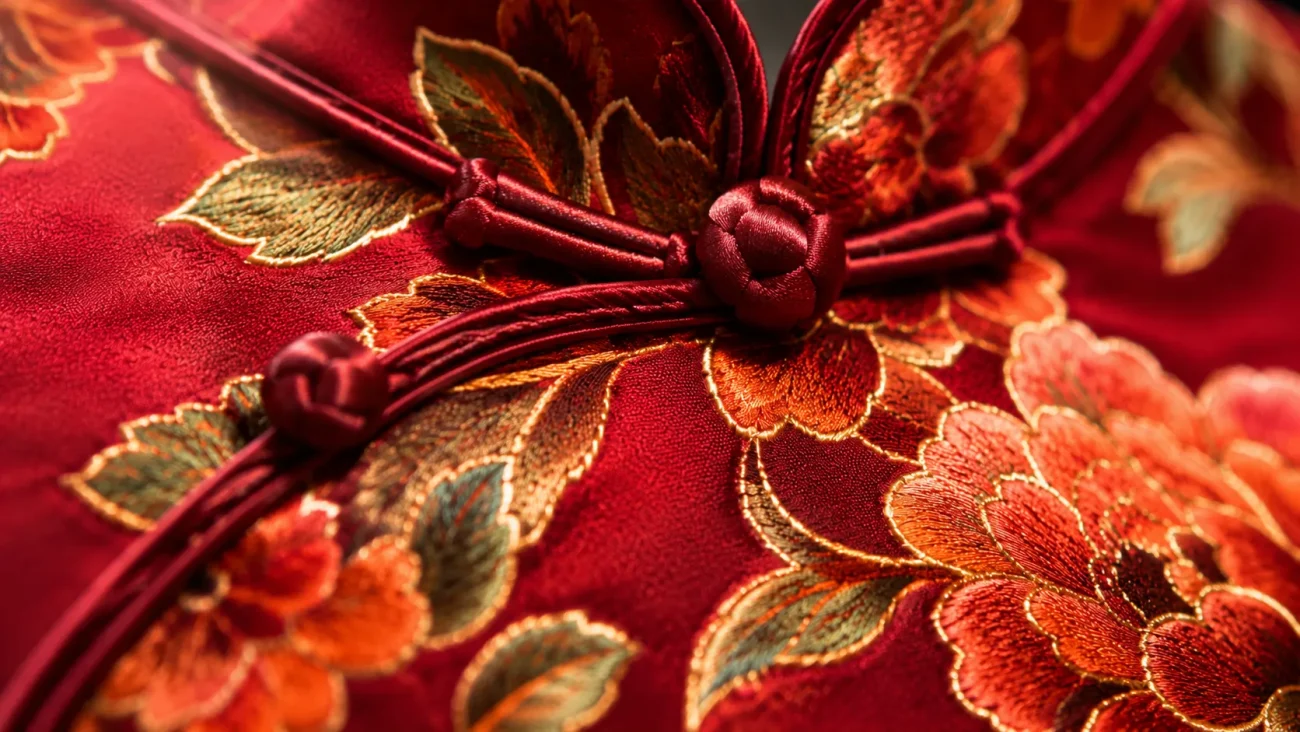
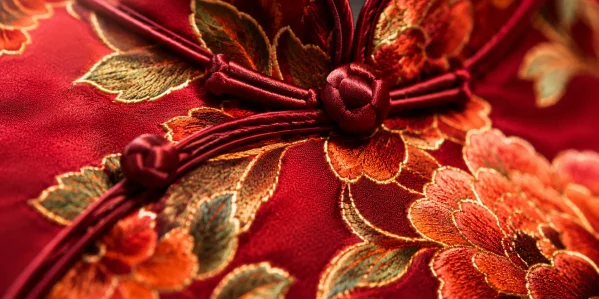
If your dress has a large amount of frog buttons, raised embroidery, or beading, those raised details can easily snag during washing. This is especially true for beaded qipaos, where hand sewn threads can break once they become wet and are pulled. For styles with complex craftsmanship, professional dry cleaning is the safest option.
How to Clean Silk and Satin Qipaos: The Less You Do, the Better
Silk and satin are among the most classic qipao fabrics, giving the dress its signature sheen and smooth feel. But these fabrics are highly sensitive to temperature, friction, and pH. Even a small mistake can cause irreversible damage.
Why dry cleaning is recommended
Silk can shrink and fade very easily during washing, especially in dark or bright colors. Dry cleaning helps protect the fragile fiber structure and preserves the garment’s original shape, drape, and luster as much as possible. If you are not confident in your hand washing technique, a reliable dry cleaner is the safest choice.
The correct way to hand wash at home
If the dress only has a little sweat on it and the care label clearly says it can be washed, you can try a gentle home wash.
- Prepare cold water and a special detergent: never use laundry powder or everyday alkaline soap. They can damage silk protein, making the fabric stiff and discolored. Use a pH neutral silk cleanser made for delicate fabrics.
- Turn it inside out and test first: turn the qipao inside out and test a hidden inner corner with a little water first to make sure it will not bleed badly.
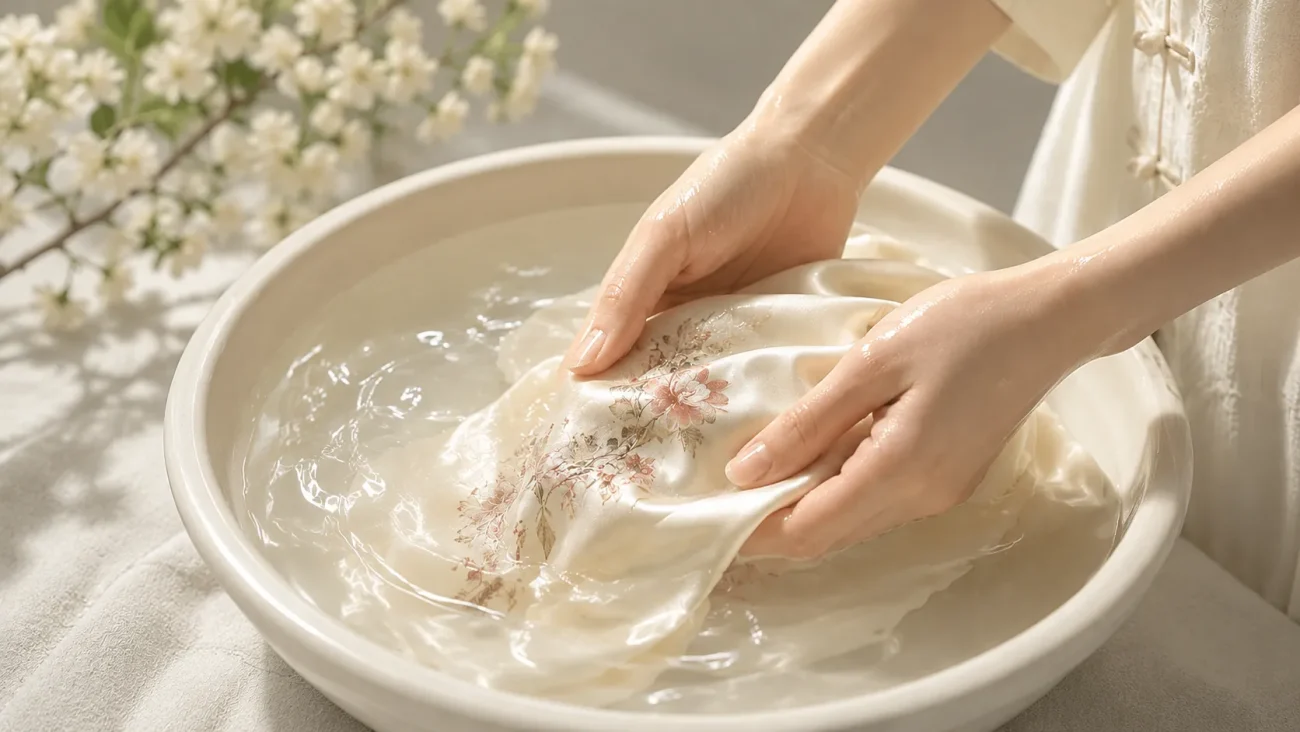
- Clean with light pressing only: soak the garment in cold water and press it gently for 3 to 5 minutes. Do not rub the collar, underarms, or frog button area.
- Absorb water instead of wringing: after removing it from the water, wrap the qipao in a clean thick towel and press gently so the towel can absorb the moisture. Never twist it hard. That can create deep creases that are extremely difficult to iron out.
Cleaning Cotton, Linen, and Faux Silk Qipaos
These fabrics are easier to care for than silk, but they still require attention to shape retention and color protection.
How to prevent shrinkage in cotton and linen
The biggest risks for cotton and linen qipaos are shrinkage and wrinkling. Water temperature should never exceed 30 degrees Celsius. After washing, do not twist the garment dry. It is better to hang it while still damp in a cool, ventilated area and let gravity naturally straighten the fibers. Cotton and linen may release a little color the first time they are washed, so it is best to wash them separately at first to avoid staining other clothes.
Care tips for faux silk
Polyester based faux silk qipaos are less likely to shrink and can be hand washed in cold water. If there are no complicated embellishments, gentle machine washing inside a laundry bag is also possible. However, this fabric is prone to static and physical snagging. Add a small amount of fabric softener when washing, and avoid washing it with clothes that have metal zippers or hook and loop fasteners.
How to Care for Embroidered and Beaded Qipaos: A Detail Guide
Qipaos with decorative craftsmanship are like wearable art. The core rule for embroidered qipao care is to avoid any kind of pulling or soaking.
For small localized stains, try spot cleaning whenever possible. If oil gets on the fabric, use a cotton swab dipped in a small amount of mild dish soap and gently dab the stain, then wipe it clean with a slightly damp cotton cloth. Never soak an entire heavily decorated qipao in water. Once the fabric absorbs water, the extra weight can stretch the dress badly when lifted, which may cause beads to fall off or embroidery to distort. After wearing, it is usually enough to hang the dress in a cool, ventilated place to air out sweat odors. Unless necessary, do not wash it.
Qipao Care and Storage: How to Prevent Mold, Yellowing, and Shape Loss
Washing correctly is only half the job. Proper storage is the other half. The wrong storage method can slowly age a delicate dress inside the closet.
Should you hang it or store it flat?
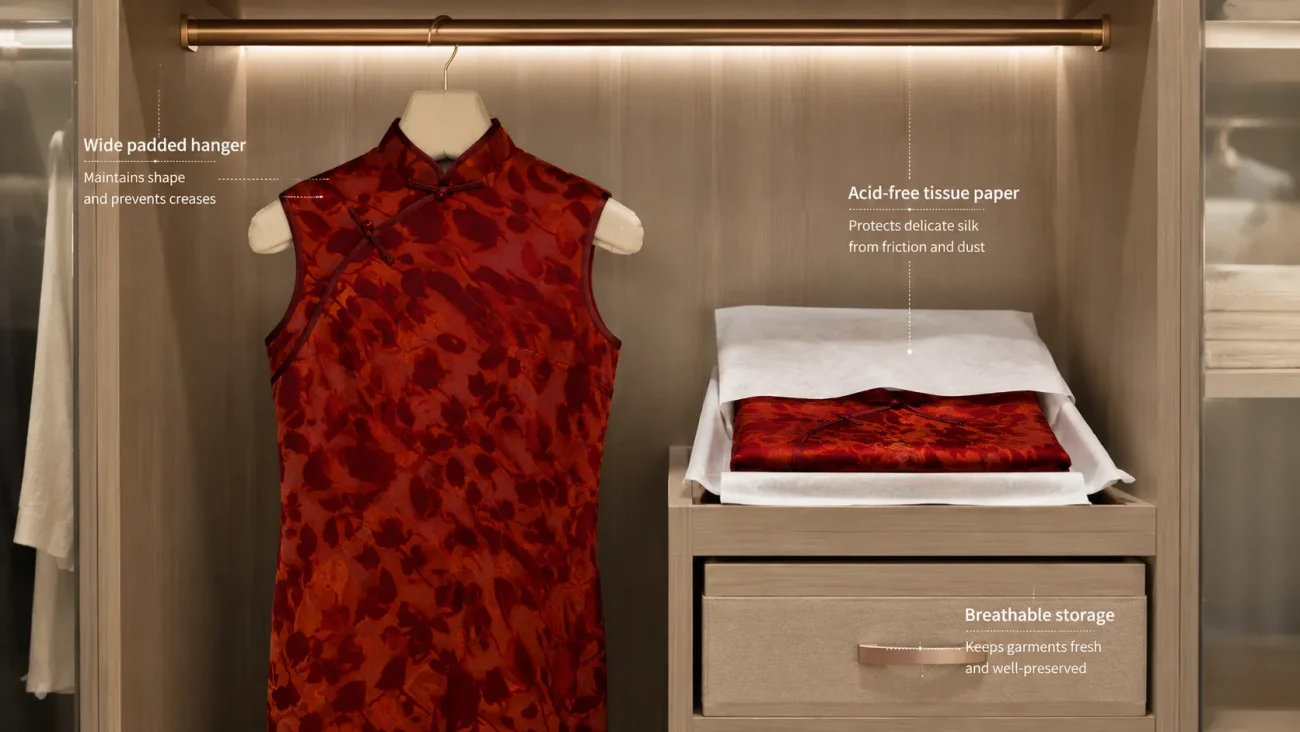
Most regular fabric qipaos can be hung for storage. Be sure to use a wide shoulder hanger with curved ends and thick sponge padding to avoid creating two ugly bumps at the shoulders. If the piece is made of heavy silk or covered with beads from top to bottom, the weight of the garment can stretch the collar and waist over time if it is hung for too long. In that case, it should be wrapped in acid free tissue paper and stored flat in a storage box.
How to prevent mold and yellowing
Qipaos do not like humidity or direct sunlight. Make sure the dress is completely dry before storing it. Do not place strongly scented mothballs in the wardrobe. They can cause silk to yellow, and the smell can be difficult to remove from the fabric. Natural cedar blocks or silica gel desiccants are better choices for mold prevention. If you use a garment cover, choose breathable nonwoven or cotton fabric. Plastic covers trap moisture and can actually increase the risk of mold.
Qipao Cleaning & Care FAQs
Q: Can a qipao be ironed? How can I do it without damaging the fabric?
A: Yes, but the method depends on the fabric. For silk and satin qipaos, a steamer is recommended. If the garment is still slightly damp, or if you place a layer of lightly damp white cotton cloth between the iron and the dress, use low to medium heat and press through the cloth. Never let a hot iron touch the surface directly, or the fabric may become shiny or scorched. Embroidered areas should be pressed gently from the reverse side so the raised stitching does not flatten.
Q: Why did my silk qipao lose its sheen after washing?
A: This is usually caused by using an alkaline detergent, such as regular laundry liquid or soap, or by drying the garment in direct sunlight. Both alkalinity and ultraviolet light can permanently damage silk protein. If you add a few drops of white vinegar to the final cold rinse, it can help neutralize some alkalinity and may restore part of the fabric’s sheen.
Q: What should I do if the underarm area turns yellow from sweat stains?
A: Sweat contains protein, which can oxidize and turn yellow over time. For cotton or linen qipaos, you can try soaking the yellowed area in cold water with a small amount of baking soda. But if a silk or satin qipao has yellowed, it is difficult to treat safely at home. Strong bleaching will ruin the fabric, so it is better to send it to a professional luxury dry cleaner for stain removal and color restoration.

Related posts
Qipao Pronunciation | How to Pronounce Cheongsam and Qipao
When discussing traditional Chinese clothing in English, Qipao and Cheongsam are the two most freque...

What Do the Colors of a Qipao Represent?
The qipao, also known as the cheongsam, is one of the most recognizable traditional garments in the ...
Can Non Chinese Wear Qipao? Can Foreigners Wear Qipao
Qipao, also written as qipao or cheongsam, is one of the most recognizable traditional garments in C...
Can Anyone Wear Qipao? Can White People Wear Cheongsam?
Qipao, also commonly written as qipao or cheongsam, is one of the most recognizable Chinese garments...
How to Clean and Maintain Qipao / Cheongsam
Buying a qipao you love is only the first step. The real challenge is keeping its drape and sheen in...
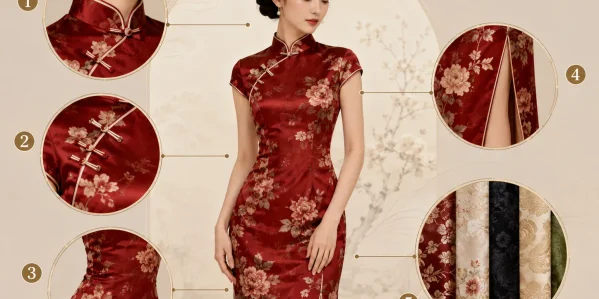
Qipao History | Chinese Cheongsam Dress History
The qipao, also known as the cheongsam, is one of the traditional garments that best represents the ...
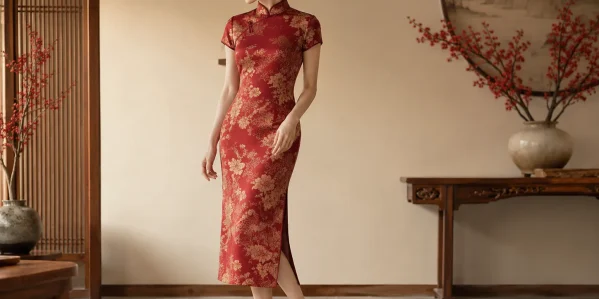
What Shoes to Wear With a Qipao | Cheongsam Shoes Matching Guide
Qipao, also known as Cheongsam, originated in the 1920s and 1930s and is one of the most iconic form...
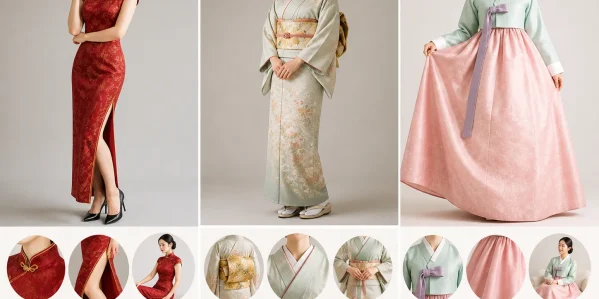
Qipao vs Kimono vs Hanbok | What is the Difference?
Qipao, kimono, and hanbok represent the traditional clothing cultures of China, Japan, and Korea, re...
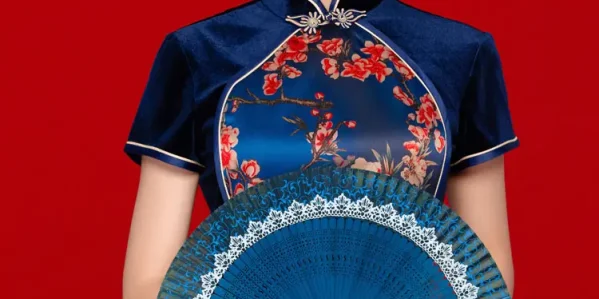
Kimono vs Qipao / Cheongsam | What is the Difference?
Kimono and qipao are both highly recognizable Eastern garments, but they come from different cultura...
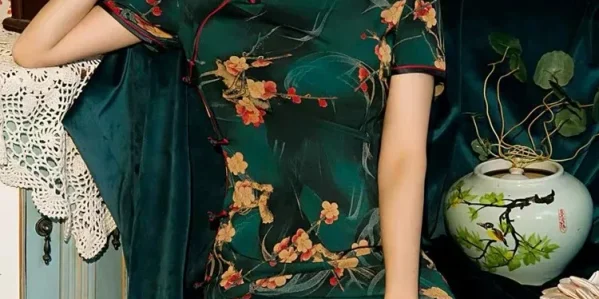
Modern Qipao vs Traditional Qipao | What is the Difference?
Modern qipao and traditional qipao both come from Eastern fashion aesthetics, but they are not the s...
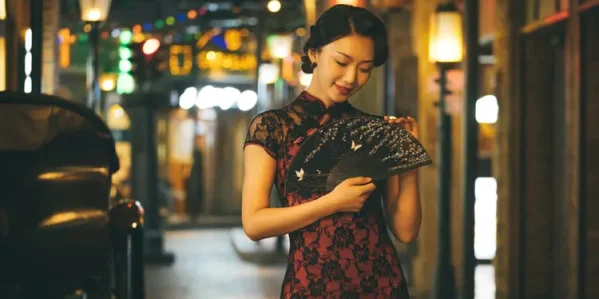
Hanfu vs Qipao / Cheongsam
Hanfu and Qipao/Cheongsam are the most representative classic Chinese garments, each boasting distin...
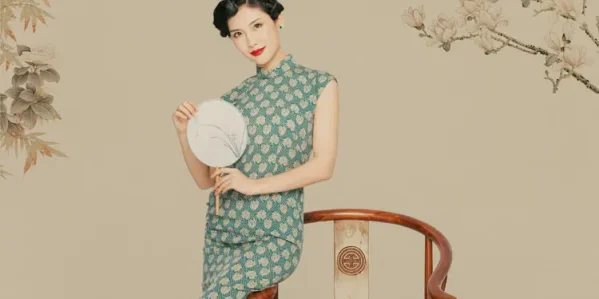
Qipao vs Cheongsam
If you are familiar with Chinese traditional clothing, you must be familiar with the two terms Cheon...
Bestselling Qipao







Recent Comments