Free Worldwide Shipping | Subscribe to Our Newsletter for 10% Off Your First Order

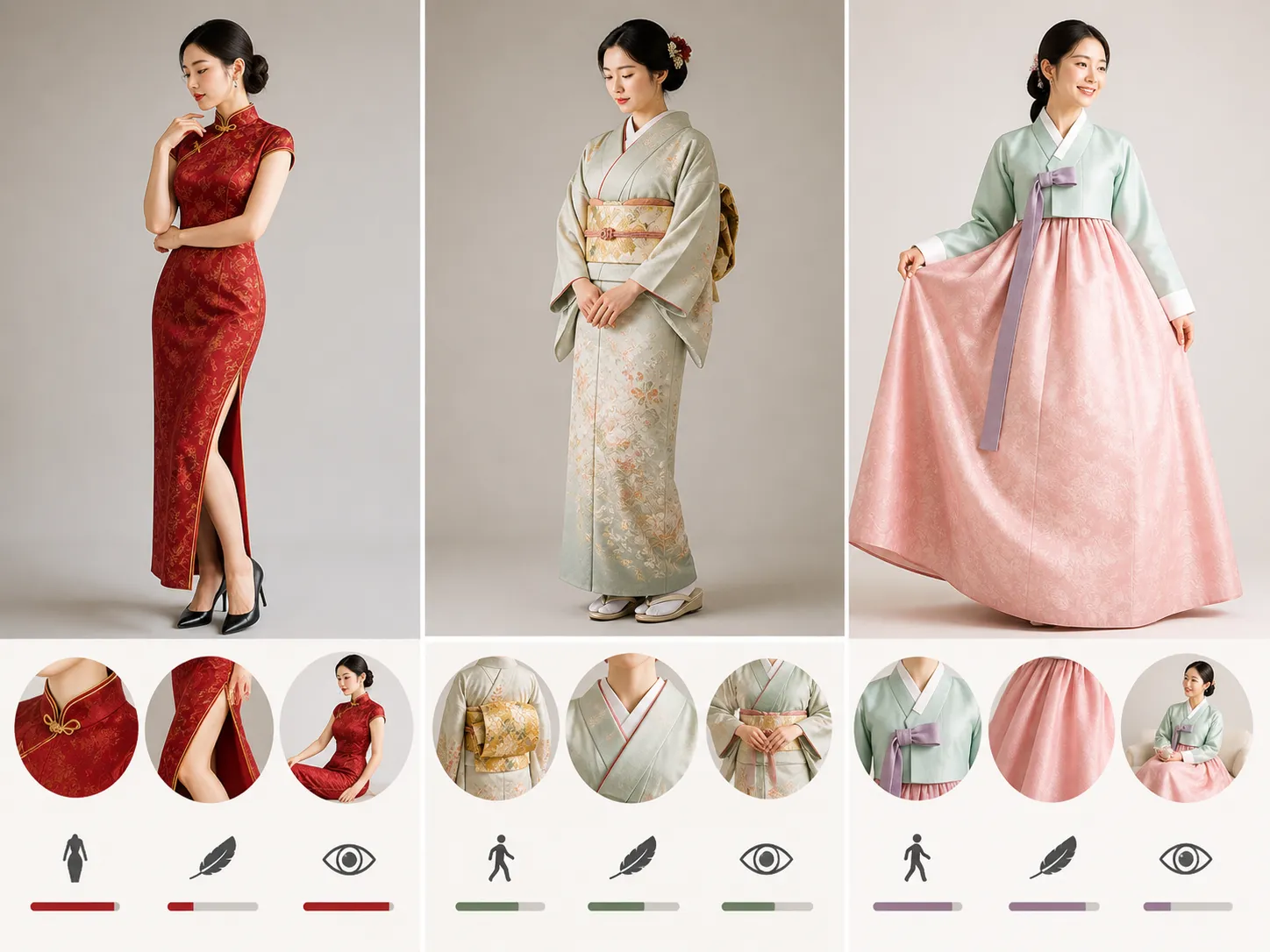

Qipao, kimono, and hanbok represent the traditional clothing cultures of China, Japan, and Korea, respectively. Each has developed its own distinct aesthetic and set of etiquette standards. This article compares their differences from multiple perspectives, including historical origins, design features, wearing occasions and etiquette, wearing experience, and value for money, to help readers better understand each style and choose the one that best suits them.
Qipao vs Kimono vs Hanbok: What Are the Differences?
| Category | Cheongsam | Kimono | Hanbok |
|---|---|---|---|
| Origin and Cultural Context | China, modern and contemporary Eastern formal wear culture | Japan, traditional ceremonial clothing culture | Korea, traditional ceremonial and festive clothing culture |
| Common Fabrics | Silk, satin, jacquard, brocade, cotton and linen | Silk, silk crepe, linen, kapok | Silk, cotton, linen, polyester blends |
| Key Visual Features | Fitted silhouette, stand up collar, side slits | Straight cut panels, wide sleeves, prominent belt | Short top, high waisted long skirt, loose silhouette |
| Common Occasions | Weddings, formal dinners, photoshoots, festivals | Weddings, tea ceremonies, festivals, formal events | Weddings, festivals, royal court experiences, photoshoots |
| Visual Impression | Elegant, crisp, highly modern | Dignified, understated, highly ceremonial | Light, soft, vividly colorful |
Different Countries and Cultural Roots
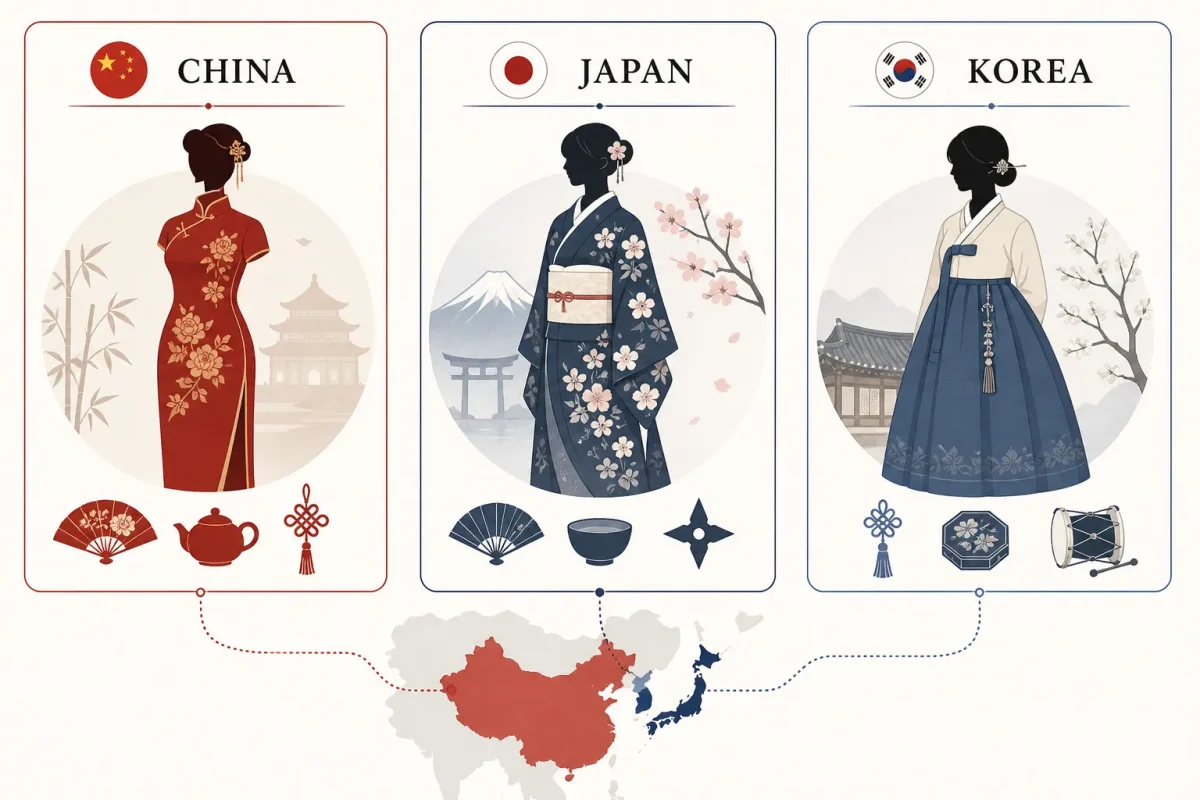
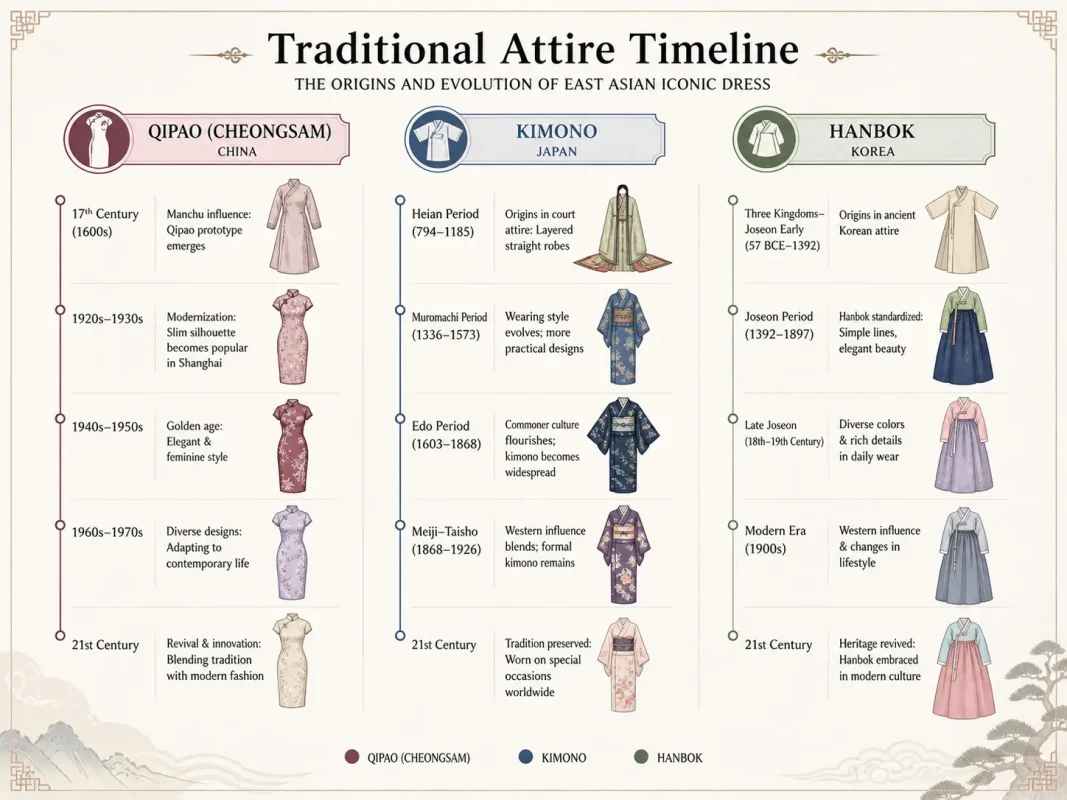
The qipao originated from Manchu clothing of the Qing Dynasty, known as qizhuang, and began to appear in the 17th century. In modern form, the qipao was refined in Shanghai during the Republican era into a more fitted, shorter silhouette, and in 1929 it was officially designated as formal wear for Chinese women.
The kimono was influenced by Chinese Hanfu. In the 8th century, during Japan’s Nara period, Chinese style clothing was introduced to Japan. By the Heian period, it evolved into the aristocratic junihitoe, and during the Edo period, the sleeve width and obi belt were further standardized.
The Korean word “hanbok” means “Korean clothing.” It originated from garments worn during the Three Kingdoms period, from 57 BC to 668 AD. During the Goryeo Dynasty, it was influenced by Mongolian styles. In the Joseon Dynasty, from 1392 to 1897, it gradually took on the familiar combination of a short jacket and a long skirt or trousers.
Comparison of Appearance and Features
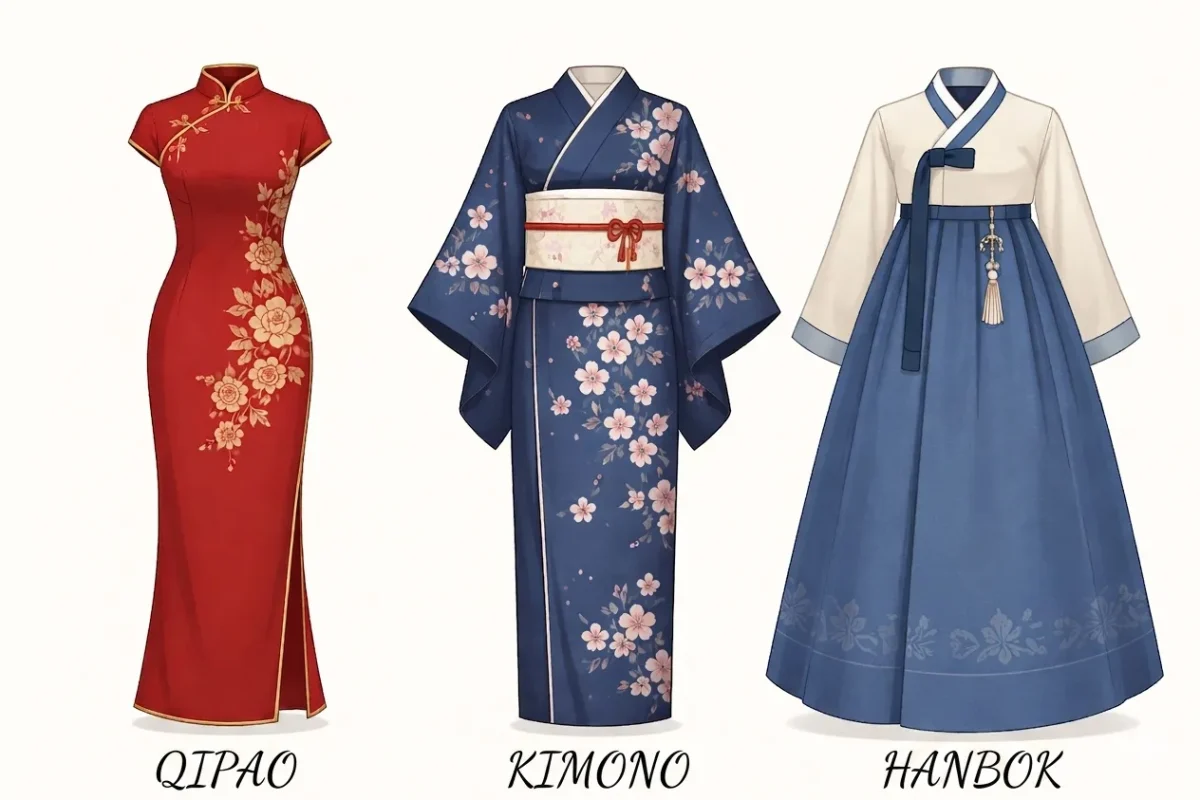
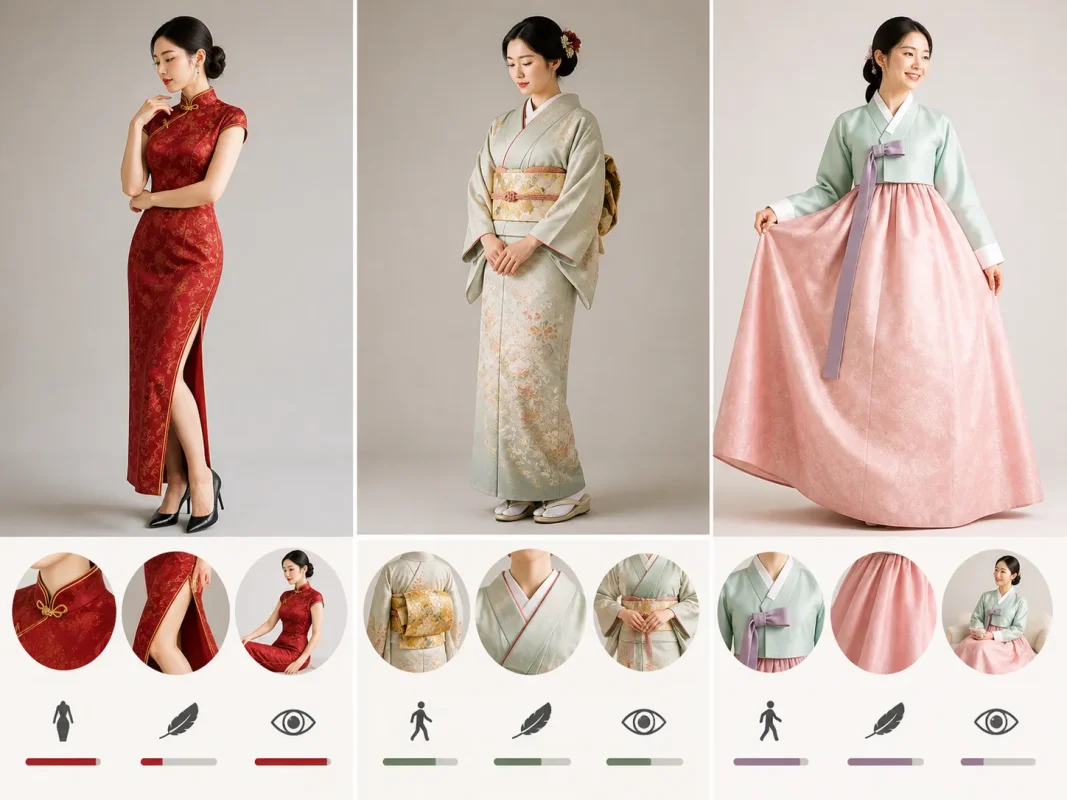
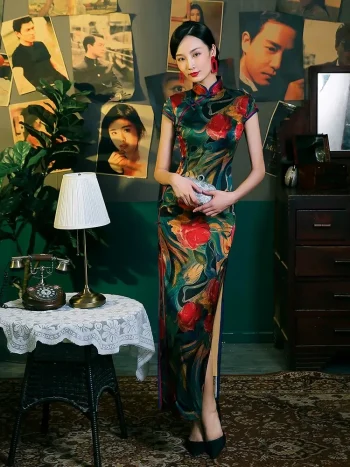
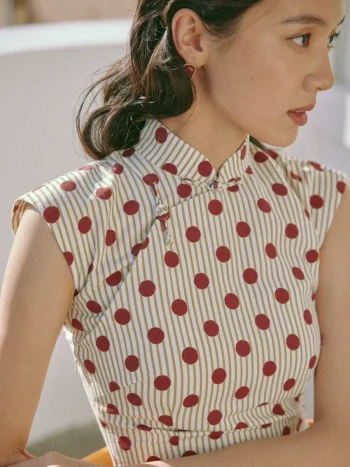
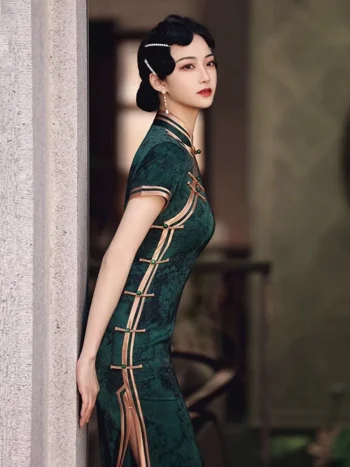
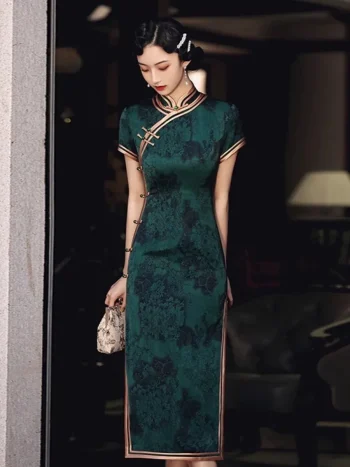
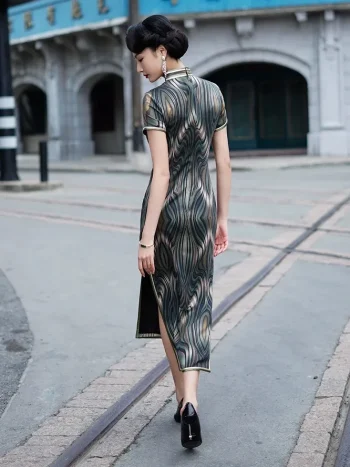
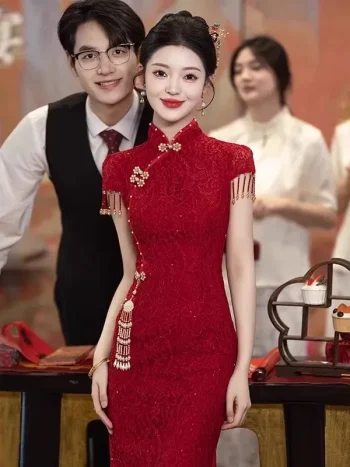
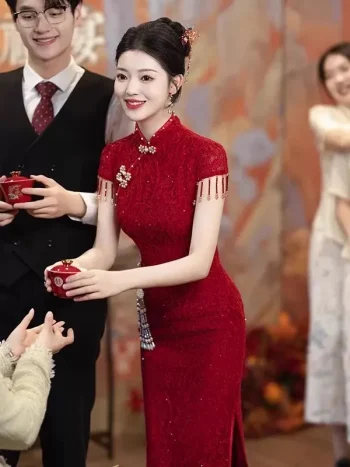
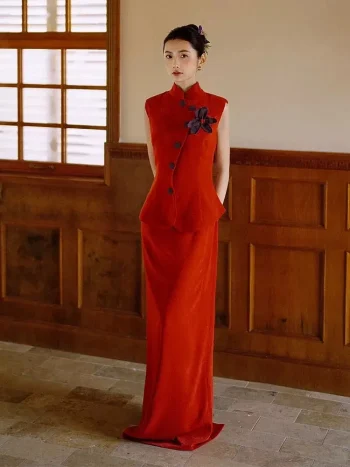
The qipao is known for its close fitting silhouette and mandarin collar. The neckline is high and structured, the right front panel usually overlaps on top, and it is fastened with frog buttons or other closures. Modern qipao designs are tailored to follow the body closely, often with high side slits. They are usually made from lightweight silk fabrics and decorated with auspicious motifs such as peonies and other floral patterns.
The kimono has a straight, T shaped silhouette. The left front panel overlaps the right front panel, and the garment is secured with a wide obi belt. Traditional kimono are worn in layers, with very wide outer sleeves and no side slits. Their patterns often reflect the season or the purpose of the garment, such as cherry blossoms or pine and bamboo motifs.
Hanbok consists of a short jacket, called jeogori, and a high waisted full skirt, called chima. For men, the set usually includes an upper garment and trousers. The neckline sits more centrally and opens lower, and the left front panel overlaps the right without a symmetrical front opening. Women’s sleeves and skirt hems often feature five color stripe accents. Overall, hanbok is loose, flowing, and full, with a voluminous skirt shape.
Design Details That Are Most Easily Confused
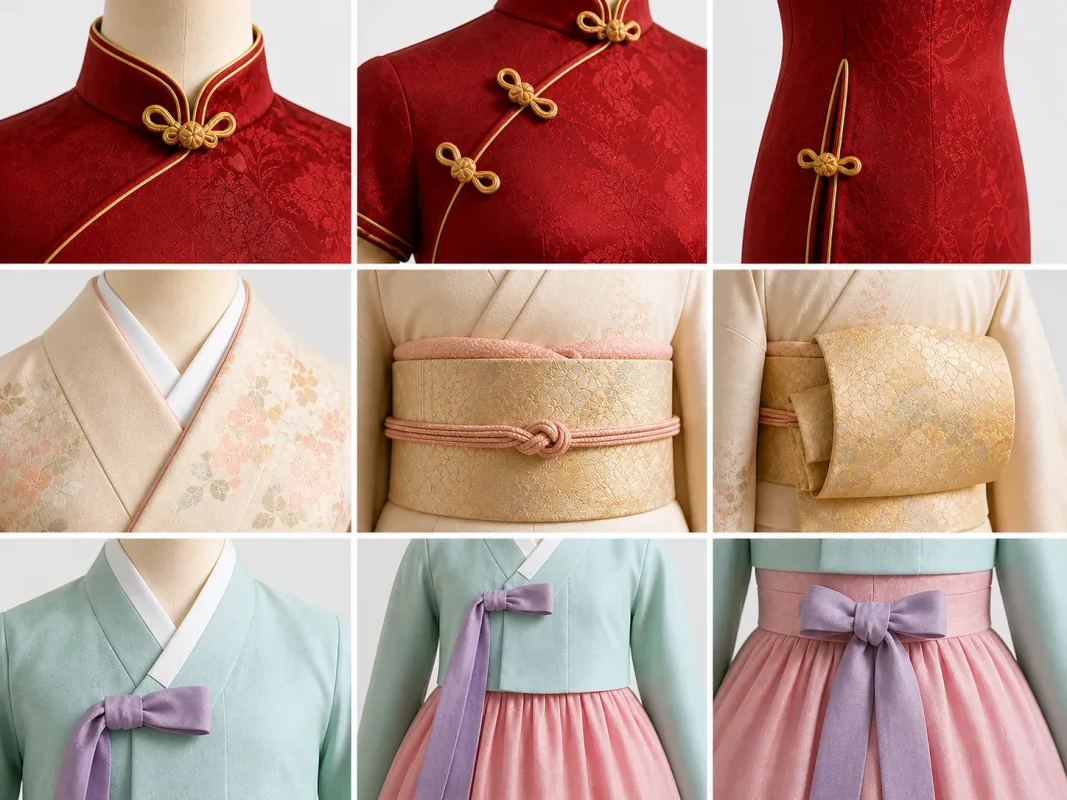
Cut and structure: The qipao is a one piece, body skimming dress with side slits and no layered front panel. The kimono is a wrap style robe with a symmetrical appearance, no slits, and is secured only by the underlayers and obi. Hanbok is a two piece outfit, with a short top and a wide skirt.
Front overlap: In kimono, the left front panel must be on the outside. Reversing the overlap is considered funeral wear. Qipao and hanbok do not generally follow the same rule in the front closure. Qipao relies on its structure and inner lining for support, while hanbok is secured with a waist tie.
Waist belt and slits: The qipao has no waist belt. It fits the body closely and has side slits at the hem. Kimono always uses a wide obi around the waist and has no slits. Hanbok uses a narrow tie for the top, while the skirt covers the lower body and also has no slits.
Neckline and fasteners: The qipao has a clearly defined mandarin collar with frog buttons. Kimono does not use a collar tie and is usually open over the inner layer below. Hanbok has a V shaped neckline, and the edges are often finished with trim.
Hem shape: The hanbok skirt is very wide and full, giving it a much more voluminous look than the straight, long kimono or the fitted qipao.
Accessories: Kimono are traditionally worn with tabi socks, straw sandals, and elaborate obi bows. Qipao are often paired with simple embroidered shoes or heels. Hanbok is worn with Korean cloth shoes, called kkotsin, and accessories such as norigae pendants.
Qipao vs Kimono vs Hanbok: Historical Origins, Cultural Meaning, and Dress Etiquette
The Historical Development and Cultural Meaning of Kimono
The kimono took shape in Japan during the Nara and Heian periods in the 8th century, drawing influence from Chinese Hanfu. It uses a straight line cutting method, which allows it to fit different body types without body contour tailoring. Over time, through the samurai era, it retained its wide sleeves and the left over right wrapping style. After the Edo period, kimono became an important ceremonial garment in Japan. Different styles are worn for different occasions such as weddings, coming of age ceremonies, tea ceremonies, and festivals. Kimono emphasize simplicity and natural beauty, with careful attention to color harmony and seasonal changes. They represent Japanese traditional aesthetics and social status, such as black tomesode for married women’s formal wear.
The Historical Development and Cultural Meaning of Hanbok
Hanbok has a long history that can be traced back to the Three Kingdoms period, around the first century BC, when it appeared as a simple single layer outfit. During the Goryeo period, it was influenced by Mongolian riding clothing, resulting in narrower sleeves and wider skirts, with a more varied style.
During the Joseon Dynasty, from 1392 to 1897, the silhouette became more established. Women wore a short jacket with a long skirt, with the neckline raised and fitted closer to the chest to express modest elegance. Men wore long robes with wide trousers. In terms of color, Joseon Confucian culture valued dignity and restraint, and ordinary people often wore plain white as daily clothing, which is why Korea has been called the “white clad nation.” Richer colors were reserved for major occasions. The five colors, blue, red, yellow, white, and black, symbolize the natural order of heaven and earth. Red is often used for celebrations, while blue and green represent vitality. Although everyday clothing has become Westernized, hanbok remains highly respected for festivals and weddings. Modern hanbok has also been redesigned with blended fabrics and shorter skirts to make it lighter and more practical.
The Historical Development and Cultural Meaning of Qipao
The qipao is one of the representative garments of modern Chinese women, originating in the late Qing and early Republican periods. At that time, with the rise of the Republic of China and ideas of gender equality, women began to adopt robe like garments similar to men’s long robes, which gradually evolved into the fitted qipao style.
After the 1920s, Shanghai became the center of qipao refinement. The cut became more fitted, and classic features such as the mandarin collar, frog buttons, and high side slits emerged. The qipao combines traditional Chinese tailoring with Western body conscious aesthetics. It preserves Chinese elements such as frog closures and embroidery while highlighting the curves of the female form.
In the first half of the 20th century, the qipao became a formal garment for women in China, especially in Shanghai and Hong Kong. Public figures and diplomats often wore qipao to formal events, where it came to symbolize the combination of tradition and modernity. To this day, qipao are often worn as formal attire for major celebrations, weddings, and diplomatic occasions.
Qipao vs Kimono vs Hanbok Dress Etiquette and Taboos
Kimono etiquette: Wearing kimono requires careful layering. The left front panel must be over the right front panel; right over left is reserved for funerals. When walking, one should avoid large steps and instead take small steps to preserve elegance. At shrines or formal ceremonies, women often wear their hair in a bun with hairpins, together with tabi socks and straw sandals. Men wear hakama or kariginu style garments with belts.
Hanbok etiquette: Hanbok must be worn as a complete set, with the jeogori and skirt or trousers worn together. The left side overlaps the right side, and the garment is tied with a goreum ribbon. The hem should cover the legs, reflecting dignity and propriety. Traditional hanbok is loose, allowing the wearer to move naturally and gracefully, and it values a modest, understated beauty. In modern hanbok styling, soft colors and simple accessories are often chosen to highlight the garment’s lines and color harmony.
Qipao etiquette: Qipao wearing is more flexible and does not involve strict traditional taboos, but styling is usually kept tasteful and modest. Because the qipao is fitted, the inner layer should not be overly revealing, and excessive exposure of the chest or back should be avoided. It is usually paired with heels or slim strap sandals to enhance the silhouette while keeping an elegant look. Qipao are often worn for festive occasions such as weddings, holidays, and formal banquets, and the patterns and colors are usually chosen to suit the occasion.
Qipao vs Kimono vs Hanbok: Wearing Experience, Adaptability, and Value
Body Inclusiveness and Wearing Difficulty
The qipao is designed to fit closely and emphasizes the female silhouette, so it does not conceal body shape very much. It tends to look best on taller figures or those with more defined curves.
Kimono use straight line cutting, so they do not cling to the body and do not necessarily make the wearer look taller or slimmer, but they can be worn by a wide range of body types and heights.
Hanbok features a short top, a fitted waistline, and a wide skirt. The overall shape is loose and can effectively soften areas of the body that someone may want to downplay, making many body types look graceful and dignified.
Ease of Wearing and Daily Care
Qipao are usually one piece dresses, so they are relatively easy to put on and take off, often with a back zipper or hidden fastener. Their care is similar to modern formal dresses.
Kimono are the most complicated to wear. They require multiple inner layers, outer layers, and a wide obi to secure everything in place. In many cases, another person’s help is needed to dress properly. Simplified yukata are much easier to wear.
Hanbok sits between the two. The top and bottom are worn separately and tied with ribbons, making it much easier than kimono. The level of difficulty is moderate. In terms of care, all three are often made from silk, cotton, or linen and may require hand washing or dry cleaning. In recent years, many updated versions have also been made to be easier to wash and wear.
Value for Money Comparison
If the budget is limited, hanbok and basic qipao are easier to buy and more practical for frequent use. Traditional kimono are the most expensive, especially those made from high quality silk with proper accessories. If the priority is strong visual impact, controlled cost, and ease of use, hanbok and qipao are usually more cost effective. If the goal is full ceremonial authenticity and collectible value, kimono carry greater cultural value.
Qipao vs Kimono vs Hanbok: Which One Is Right for You?
Choose by Occasion
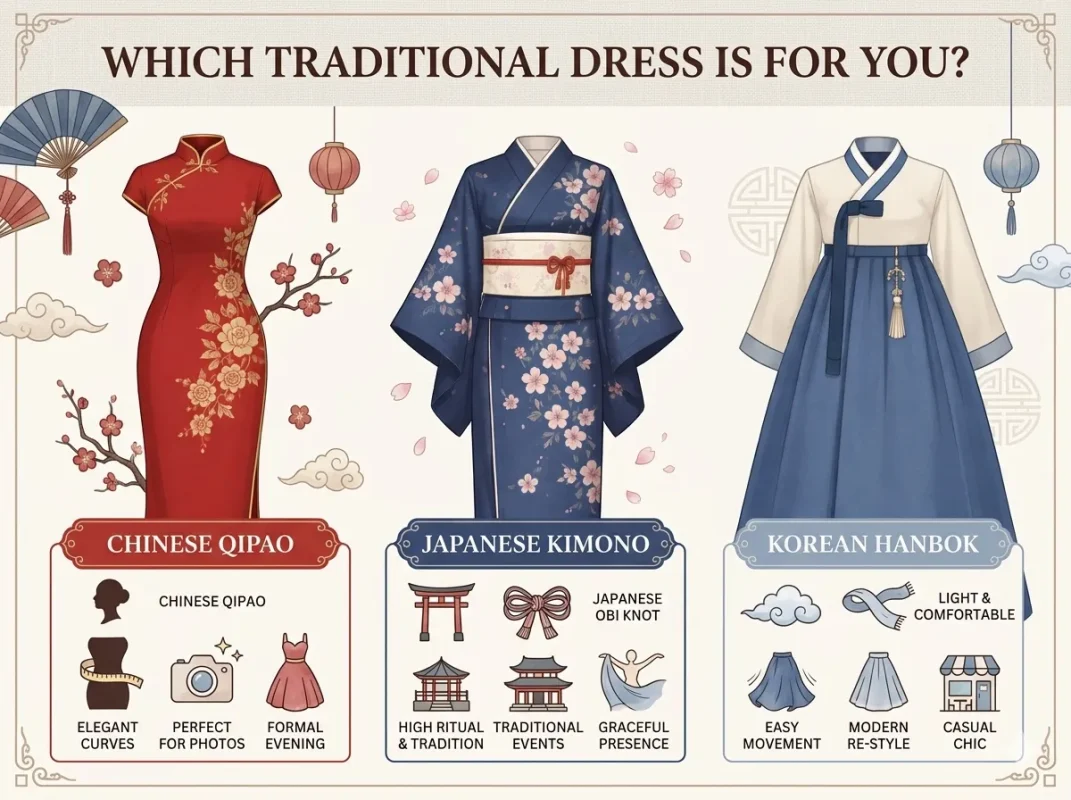
For a Chinese style wedding, festival, or formal banquet, qipao is usually the best choice. For a Japanese tea ceremony, shrine visit, or traditional formal event, kimono is more appropriate. For a Korean festival, palace experience, or Korean wedding themed photo shoot, hanbok feels the most natural. If you are simply taking photos, all three can work, but the event location and atmosphere should come first.
1.Choose by Body Type and Comfort
If you want to emphasize curves and elegance, qipao is a strong choice. If you care more about coverage, looseness, and easy movement, hanbok is usually more comfortable. If you are willing to accept a more complex outfit and want a strong sense of ceremony, kimono delivers the deepest traditional feeling. In simple terms, choose qipao for a defined silhouette, hanbok for a lighter and more relaxed feel, and kimono for the most complete traditional experience.
2.Choose by Budget and Frequency of Use
For everyday photography or festival experiences, hanbok and qipao have a lower entry cost and are easier to wear repeatedly. Kimono is better suited to special occasions or professional experiences because the purchase, care, and wearing costs are higher. If you value practicality and photogenic results, qipao and hanbok are more economical. If you value etiquette and collectability, kimono are worth the investment.
3.Choose by Cultural Style
Qipao feels more modern, sharp, and mature. Kimono feels more restrained, understated, and formal. Hanbok feels softer, brighter, and lighter. You can think of them as three different expressions of beauty: qipao leans toward urban elegance, kimono toward traditional ceremony, and hanbok toward festivity and flow.
Qipao vs Kimono vs Hanbok: Which One Is Better for You?
Based on Occasion and Cultural Need
If you want to experience Japanese culture or attend a Japanese style celebration, you can choose kimono, such as a yukata. If you want to experience Korean traditional culture or take themed photos, hanbok is a great choice, and many Korean attractions such as Gyeongbokgung offer free admission to visitors wearing hanbok. For Chinese style occasions, qipao is the first choice, especially for Lunar New Year, weddings, and important banquets.
It is worth noting that qipao are mostly worn for festive and formal occasions, while kimono and hanbok also have their own ceremonial settings. So the best choice depends on the event and the cultural context.
Body Shape and Comfort Considerations
People who are slimmer or taller often find that qipao show body lines beautifully. If you prefer loose, comfortable clothing, or if you are shorter or have a fuller figure, hanbok and kimono may be more suitable.
The short jacket and long skirt silhouette of hanbok works well for many heights. Kimono has a straight cut that does not cling to the body, so it can suit both slim and fuller figures. In terms of comfort, hanbok and qipao are often made from breathable cotton, linen, or silk, making them relatively cool in summer. Kimono, because of their multiple layers and tight obi, can feel warmer in hot weather. By combining your body type and the surrounding temperature, you can choose the traditional garment that suits you best.
Qipao / Kimono / Hanbok FAQ
Q: Which countries do qipao, kimono, and hanbok come from?
A: Qipao comes from China and combines Han and Manchu traditions. Kimono is Japan’s traditional clothing and was influenced by Tang Dynasty style garments. Hanbok is Korea’s traditional clothing and originated in ancient Korea. They differ in cut and aesthetic.
Q: What is the most important difference among qipao, kimono, and hanbok?
A: Qipao is a one piece fitted dress that emphasizes lines. Kimono is a wrap style garment made from straight panels and secured with an obi belt. Hanbok is a short top paired with a high waisted long skirt or wide trousers, and it has the loosest silhouette. Their differences are not only visual, but also about wearing method, etiquette, and cultural context.
Q: What is the most common mistake when wearing kimono?
A: The most common mistake is wearing the front panels in the wrong direction. The correct way is left over right. Right over left is normally used only for funerals. Another common issue is taking steps that are too large, which can distort the shape of the kimono. When wearing kimono, it is best to walk in small, steady steps so the overall appearance stays natural.
Q: Does qipao require a very specific body type?
A: Traditional fitted qipao do suit some body types better, but modern qipao now come in many updated versions, including looser cuts, stretch fabrics, and different lengths. As long as the shoulder width, bust, and waist to hip proportions are chosen correctly, many body types can look good in qipao. The key is the pattern and fit, not simply being thin.
Q: Would it be inappropriate for foreigners to wear hanbok, kimono, or qipao?
A: Usually not. As long as the wearer respects the tradition and the setting, wearing hanbok in Korean temples or palaces, or kimono in Japanese traditional spaces, is generally seen as a sign of respect. Many sightseeing locations in Korea and Kyoto, Japan, offer clothing rentals because visitors enjoy the experience. Wearing qipao to Chinese related festivals is also very common. The main point is to dress neatly and behave respectfully, such as removing shoes before entering a temple and wearing kimono left over right in proper ceremonial contexts.
References & Sources
- Kimono — Encyclopaedia Britannica
- What is Cheongsam? About qipao dress
- Qipao vs Cheongsam
- Hanfu vs Qipao / Cheongsam
- Kimono vs Qipao / Cheongsam | What is the Difference?
- Dress – Eastern, Cultural, History — Encyclopaedia Britannica
- Kimono — Victoria and Albert Museum
- Kimono: Kyoto to Catwalk — Victoria and Albert Museum
- Cheongsam (1932) — The Metropolitan Museum of Art
- Cheongsam (1930s) — The Metropolitan Museum of Art
- Japanese Weddings in the Edo Period (1615–1868) — The Metropolitan Museum of Art
- Korea Information – Life — Korean Cultural Center New York

Related posts
Qipao Pronunciation | How to Pronounce Cheongsam and Qipao
When discussing traditional Chinese clothing in English, Qipao and Cheongsam are the two most freque...
What Do the Colors of a Qipao Represent?
The qipao, also known as the cheongsam, is one of the most recognizable traditional garments in the ...
Can Non Chinese Wear Qipao? Can Foreigners Wear Qipao
Qipao, also written as qipao or cheongsam, is one of the most recognizable traditional garments in C...
Can Anyone Wear Qipao? Can White People Wear Cheongsam?
Qipao, also commonly written as qipao or cheongsam, is one of the most recognizable Chinese garments...
How to Clean and Maintain Qipao / Cheongsam
Buying a qipao you love is only the first step. The real challenge is keeping its drape and sheen in...
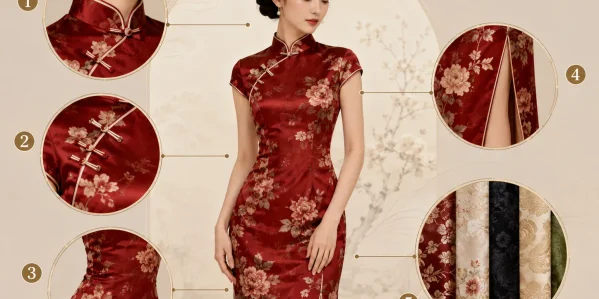
Qipao History | Chinese Cheongsam Dress History
The qipao, also known as the cheongsam, is one of the traditional garments that best represents the ...
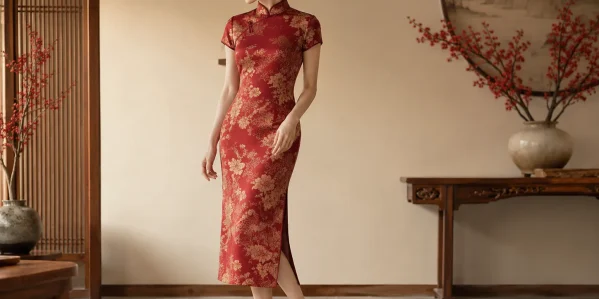
What Shoes to Wear With a Qipao | Cheongsam Shoes Matching Guide
Qipao, also known as Cheongsam, originated in the 1920s and 1930s and is one of the most iconic form...
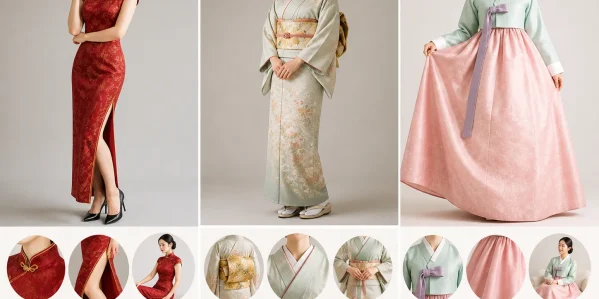
Qipao vs Kimono vs Hanbok | What is the Difference?
Qipao, kimono, and hanbok represent the traditional clothing cultures of China, Japan, and Korea, re...
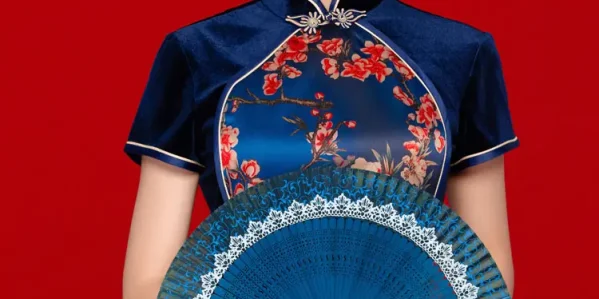
Kimono vs Qipao / Cheongsam | What is the Difference?
Kimono and qipao are both highly recognizable Eastern garments, but they come from different cultura...
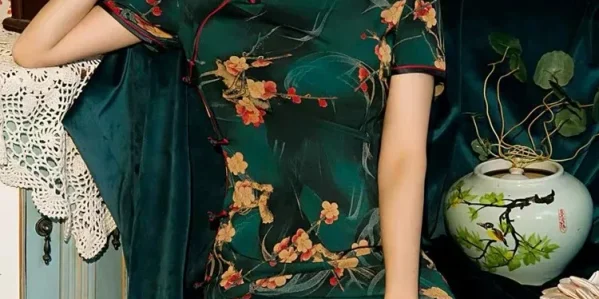
Modern Qipao vs Traditional Qipao | What is the Difference?
Modern qipao and traditional qipao both come from Eastern fashion aesthetics, but they are not the s...
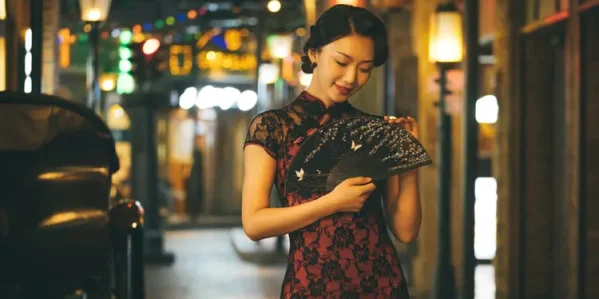
Hanfu vs Qipao / Cheongsam
Hanfu and Qipao/Cheongsam are the most representative classic Chinese garments, each boasting distin...
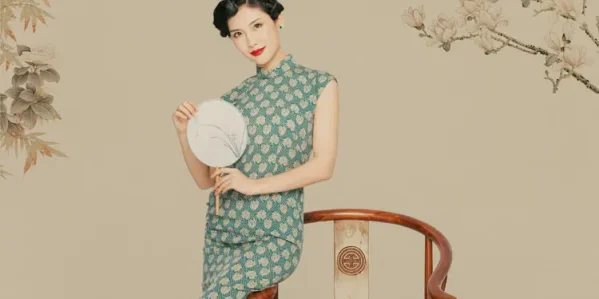
Qipao vs Cheongsam
If you are familiar with Chinese traditional clothing, you must be familiar with the two terms Cheon...
Bestselling Qipao


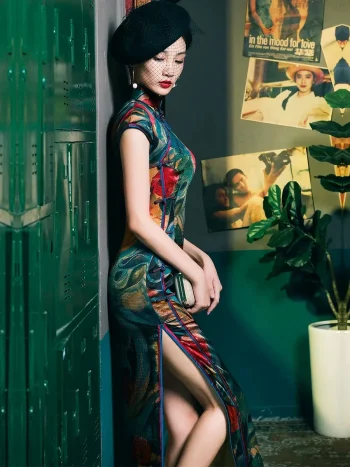
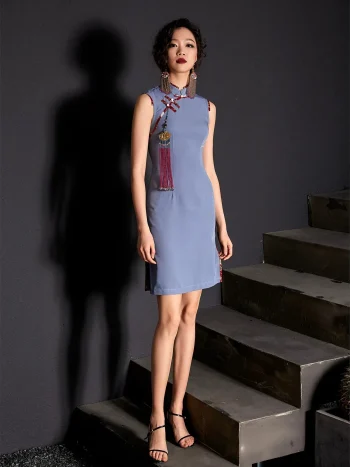
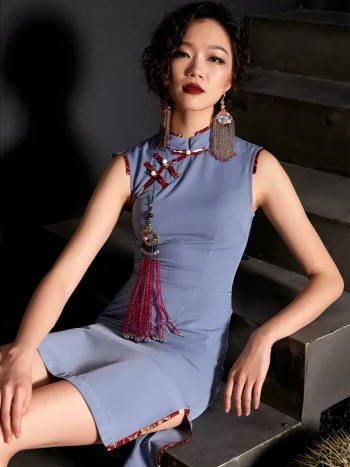
Women’s Misty Blue Short Cheongsam Dress
Price range: $109.00 through $119.00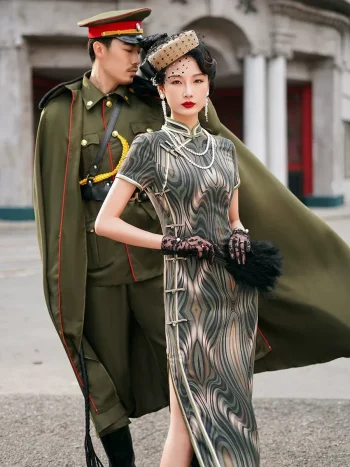
Recent Comments