Free Worldwide Shipping | Subscribe to Our Newsletter for 10% Off Your First Order

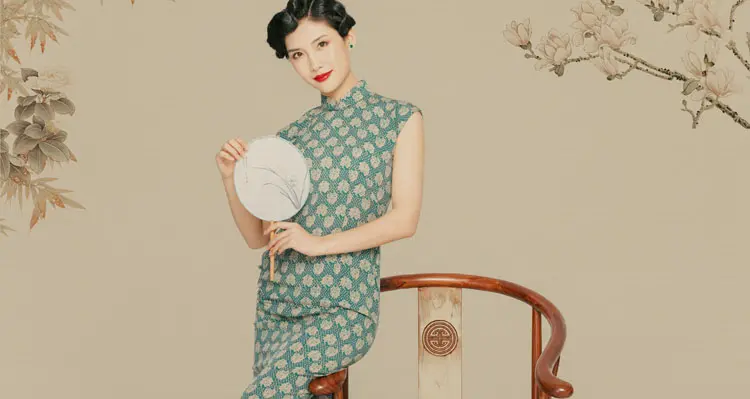

If you are familiar with Chinese traditional clothing, you must be familiar with the two terms Cheongsam and Qipao. There have always been two common views on their relationship. Some people say both refer to the well known Chinese style long dress for women. Others say they are two different kinds of clothing.
In fact, neither of these two views is wrong. The main difference between them only lies in the context and perspective from which we view them. Today, we will explain the two terms Cheongsam and Qipao clearly from three dimensions: etymology, history and modern usage, so that you can fully understand their differences.
Comparison Table of Cheongsam and Qipao
Note: In everyday use, “qipao” and “cheongsam” are often used interchangeably. The difference is mainly regional and linguistic, and both refer to the same style of dress.
| Comparison Item | Qipao | Cheongsam |
|---|---|---|
| Name Origin | The Mandarin pinyin transliteration of 旗袍. | The Cantonese transliteration of 長衫 (cheung saam), later adopted into English as "cheongsam." |
| Literal Meaning | Originally referred to Manchu-style robes in the Qing Dynasty. In modern usage, it usually means the fitted women's dress commonly known today. | Historically used to describe a long gown or long robe in Cantonese-speaking contexts. In modern English, it usually refers to the same dress as qipao. |
| Historical Development | The modern qipao took shape in the early 20th century, especially in 1920s Shanghai, and became a defining style of Chinese women's fashion. | The term became widely used in Hong Kong and overseas Chinese communities, especially through Hong Kong cinema and international fashion exposure. |
| Main Usage Regions | Commonly used in Mainland China, Taiwan, and many Chinese-speaking communities. | More commonly used in Hong Kong, Southeast Asia, and English-speaking markets. |
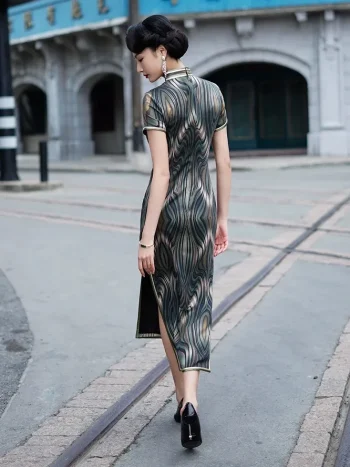
| Design Features | Typically features a high collar, asymmetric front opening, fitted silhouette, and side slits. | In modern fashion, it usually shares the same key design elements as qipao, with differences mainly in naming and regional styling. |
| Cultural Significance | Seen as a symbol of Chinese elegance, femininity, and cultural identity. | Often associated with Hong Kong style, Chinese heritage, and a refined Oriental aesthetic in international contexts. |
The Origin and Complete Development History of Cheongsam and Qipao
Qipao
Qipao is the Hanyu Pinyin transliteration of the Chinese term 旗袍 in Mandarin, the official language of China. It is the standard official term for Chinese people all over the world.
The literal meaning of the name is the robe worn by Manchu people. The Manchu people here refer to the ethnic group that ruled China during the Qing Dynasty from 1644 to 1912. The original prototype of Qipao was a loose and straight robe worn by Manchu women in the Qing Dynasty, which did not deliberately highlight body curves.
The modern slim fit Qipao we know well today took shape around 1921 and reached its peak in Shanghai, China from the 1920s to the 1940s. This improved dress broke the concealment of women’s figures by traditional Chinese clothing, and highlighted body lines with a waist fitted cut. It became a symbolic garment for Chinese women to pursue independence and embrace modernization at that time, and was also widely recognized as the national dress for Chinese women at that time.
After 1949, this kind of clothing once faded out of the mainstream vision. It revived globally again from the 1970s to the 1980s, and is now an officially recognized traditional formal dress for women in China.
Cheongsam
Cheongsam is the phonetic transliteration of the Chinese term 长衫 in Cantonese. It is the first term for Chinese women’s long dresses that became well known in the Western world.
The literal meaning of the name is long clothing. Different from Qipao, this term appeared as early as the Qing Dynasty from 1644 to 1912. Initially, it referred to traditional Chinese long robes worn by both men and women in southern China, especially in Guangdong, the core Cantonese speaking area, and was not an exclusive clothing for women.
During the Republic of China period from 1912 to 1949, as the slim fit Chinese women’s long dress became popular all over China, Cantonese speaking areas began to use Cheongsam to refer to this improved women’s clothing, and it subsequently became the mainstream term in Hong Kong, China.
From the 1950s to the 1960s, Cheongsam spread to European and American countries along with Hong Kong films, becoming the most recognized term for Chinese women’s long dresses first contacted by Western people, and this usage has continued to this day.
Clear Guide for Daily Use
In fact, you do not need to overthink the correctness of these two terms. You only need to follow two simple rules to use them naturally in all scenarios:
In general scenarios such as daily communication, clothing shopping and ordinary social interactions, the two terms can be used at will, and people all over the world can understand them accurately.
Use Qipao first in mainland China and Taiwan, China. Cheongsam will be easier for people to understand when facing people in Hong Kong, China, Southeast Asia, and English speaking countries in Europe and America.
Cheongsam / Qipao FAQs
Q: Are Cheongsam and Qipao the same garment?
A: Yes, they refer to the exact same garment.
Qipao is the Mandarin term you will see in most modern searches and contexts within mainland China.
The term Cheongsam is widely used in Hong Kong, overseas contexts, as well as on fashion and museum labels.
Q: Can Cheongsam and Qipao be used interchangeably in daily use?
A: Absolutely. In most common scenarios including daily communication, clothing shopping, and casual social interactions, the two terms can be used interchangeably with no restrictions. They are clearly understood by people around the world, with no absolute right or wrong usage or related taboos.
Q: Was Cheongsam originally a unisex garment for both men and women?
A: Yes, it was. Cheongsam is the phonetic transliteration of the Cantonese term for “long shirt”. This term emerged as early as the Qing Dynasty (1644-1912), and originally referred to traditional Chinese long robes worn by both men and women in southern China. It was not exclusive to women, and only gradually became a term specific to women’s Chinese style robes during the Republic of China period (1912-1949).
Q: What exactly does “banner people” in the etymology of Qipao refer to?
A: “Banner people” refers to the Manchu ethnic group that ruled China during the Qing Dynasty from 1644 to 1912. The Manchu people followed the Eight Banners administrative system, so they are collectively referred to as “banner people”. The original prototype of Qipao was the traditional straight cut robe worn by Manchu women in the Qing Dynasty, which is the origin of its name.
Q: Why is the term Cheongsam more commonly used than Qipao in European and American countries?
A: Because Cheongsam originates from the Cantonese speaking region. The earliest Chinese people who traveled to Europe and America in modern times mostly came from Cantonese speaking areas. It was further widely spread across Europe and America through Hong Kong films from the 1950s to the 1960s, making it the first term for Chinese women’s robes that Western audiences were exposed to. This usage habit has continued to the present day.
Q: Can people who are not of Chinese ethnicity wear Cheongsam or Qipao?
A: Of course they can. Cheongsam and Qipao are classic Oriental garments for the whole world to appreciate and wear. As long as you wear them with respect for the culture behind the clothing, people of any race or nationality can wear them freely. There are no exclusive taboos around wearing them, nor will it be regarded as cultural appropriation.
Q: What occasions are suitable for wearing Cheongsam or Qipao?
A: Cheongsam and Qipao fit an extremely wide range of occasions. Simple casual styles can be worn for everyday wear, shopping trips, and gatherings with friends, while exquisite formal styles are perfect for weddings, banquets, official ceremonies, cultural events, and all kinds of formal occasions, with very strong adaptability.

Related posts
Can Non Chinese Wear Qipao? Can Foreigners Wear Qipao
Qipao, also written as qipao or cheongsam, is one of the most recognizable traditional garments in C...
Can Anyone Wear Qipao? Can White People Wear Cheongsam?
Qipao, also commonly written as qipao or cheongsam, is one of the most recognizable Chinese garments...
How to Clean and Maintain Qipao / Cheongsam
Buying a qipao you love is only the first step. The real challenge is keeping its drape and sheen in...
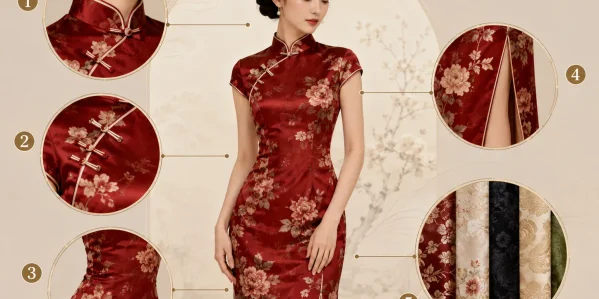
Qipao History | Chinese Cheongsam Dress History
The qipao, also known as the cheongsam, is one of the traditional garments that best represents the ...
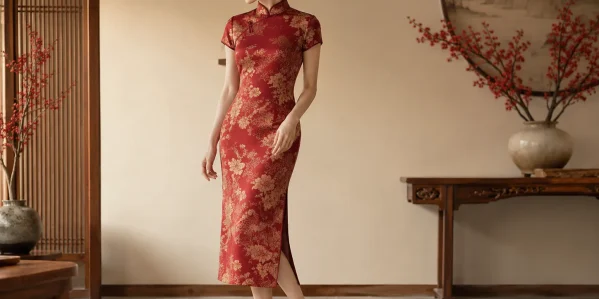
What Shoes to Wear With a Qipao | Cheongsam Shoes Matching Guide
Qipao, also known as Cheongsam, originated in the 1920s and 1930s and is one of the most iconic form...
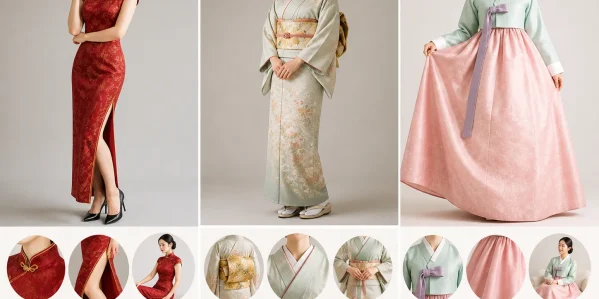
Qipao vs Kimono vs Hanbok | What is the Difference?
Qipao, kimono, and hanbok represent the traditional clothing cultures of China, Japan, and Korea, re...
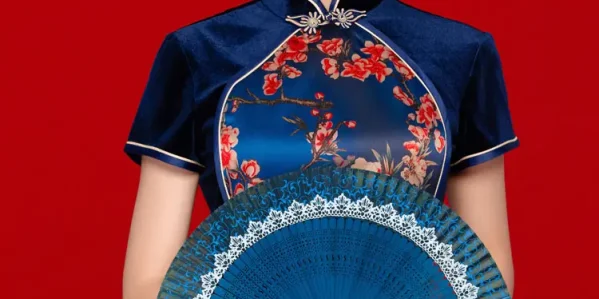
Kimono vs Qipao / Cheongsam | What is the Difference?
Kimono and qipao are both highly recognizable Eastern garments, but they come from different cultura...
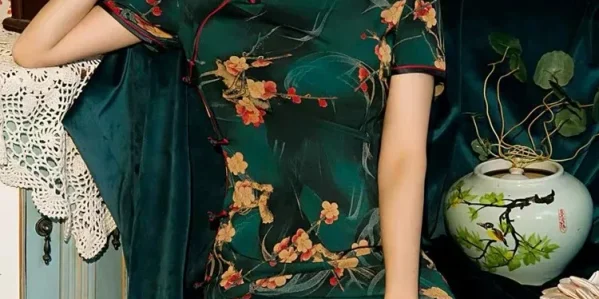
Modern Qipao vs Traditional Qipao | What is the Difference?
Modern qipao and traditional qipao both come from Eastern fashion aesthetics, but they are not the s...
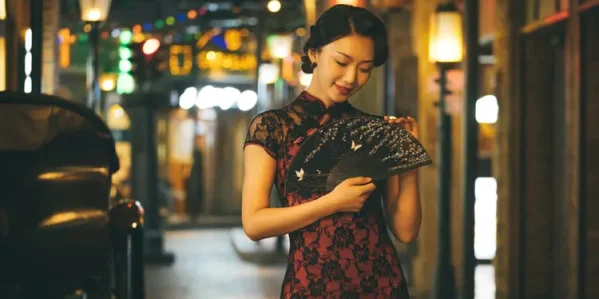
Hanfu vs Qipao / Cheongsam
Hanfu and Qipao/Cheongsam are the most representative classic Chinese garments, each boasting distin...
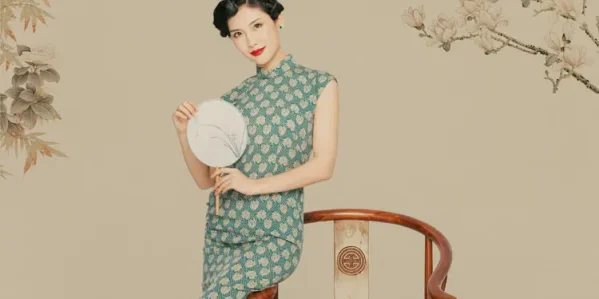
Qipao vs Cheongsam
If you are familiar with Chinese traditional clothing, you must be familiar with the two terms Cheon...
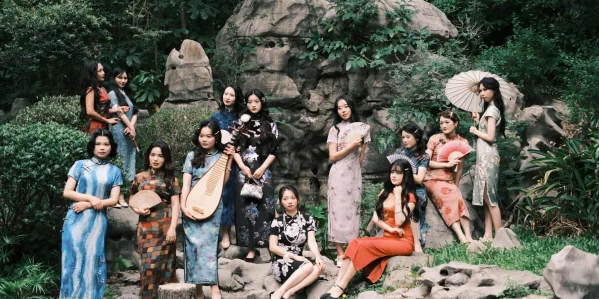
Qun Kwa vs Qipao (Cheongsam) What Are the Differences
Qun Kwa and Qipao also known as Cheongsam are two iconic classic garments. They are also the most co...
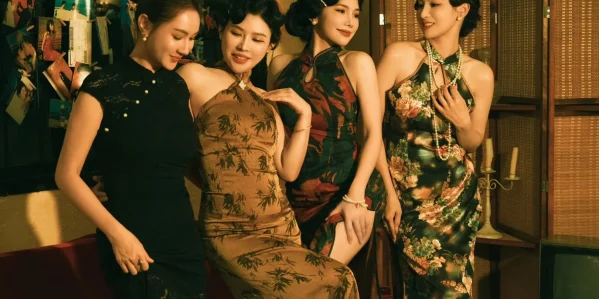
What is Cheongsam? About qipao dress
The history of the cheongsam dates back nearly a century to China in the 1920s the early days of the...
Bestselling Qipao


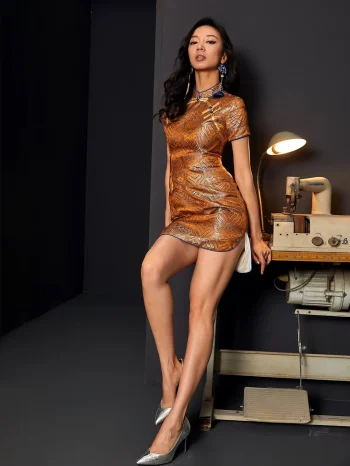
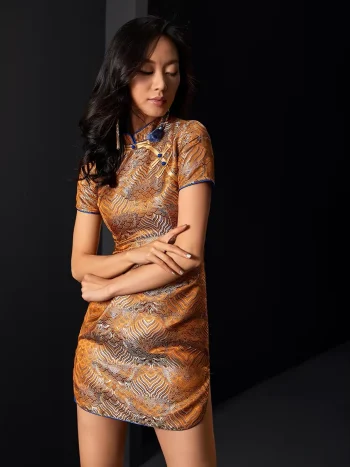
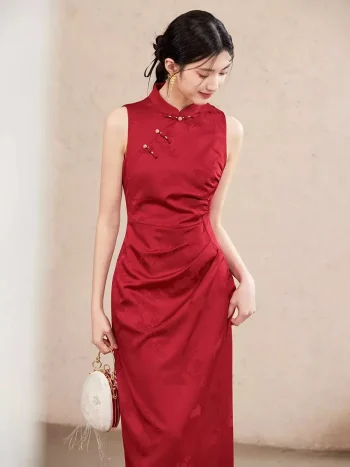
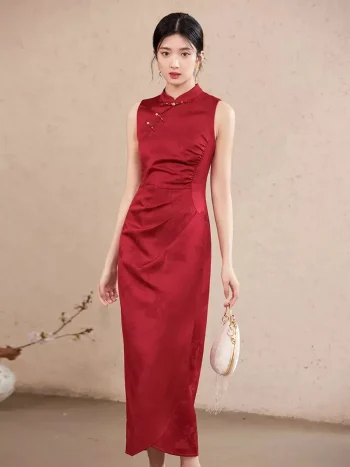
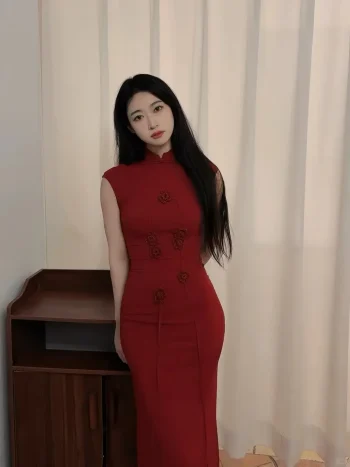
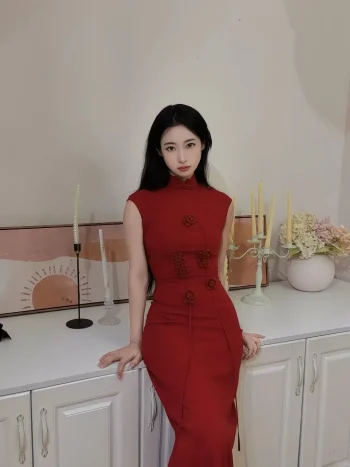
Long Slim Fit Red Cheongsam
$176.00
Recent Comments