Free Worldwide Shipping on Orders Over $159


Kimono and qipao are both highly recognizable Eastern garments, but they come from different cultural traditions and follow completely different design logic. The kimono places greater emphasis on tradition, layering, and dress etiquette, while the qipao highlights clean lines, a body-skimming cut, and a more modern sense of style.
At first glance, many people group the two together as simply “Eastern fashion.” Once you look more closely, however, the differences become clear. They vary in historical background, silhouette, construction, wearing method, and the occasions for which they are most suitable. This article starts with the most basic distinctions, then goes deeper into their cultural meaning, dress etiquette, and why the qipao is often easier to wear in practice.
Kimono vs. Qipao: A Quick Look at the Key Differences
| Comparison Item | Kimono | Cheongsam |
|---|---|---|
| Cultural Origin | Japanese traditional clothing, tracing its roots to early Japanese garment systems and gradually taking shape during the medieval period. | An iconic style within China’s clothing system, which matured and gained widespread popularity in the 1920s and 1930s. |
| Appearance Features | Loose, linear, and layered, with a strong emphasis on a wrapped silhouette and structural design. | Form fitting and curve hugging, often featuring a stand collar, asymmetric placket, defined waist, and side slits. |
| Wearing Method | Complex in construction, requiring multiple layers, fastenings, and an obi belt. | Generally simpler, making it easy to put on, take off, and style for everyday wear. |
| Style and Vibe | Regal, understated, and highly ceremonial. | Elegant, polished, and defined by clean, flattering lines. |
| Common Occasions | Worn for festivals, formal ceremonies, and traditional events. | Worn for dinners, holidays, photo shoots, formal gatherings, and casual outings with modern adaptations. |
Country and cultural roots
The kimono is a classic symbol of Japanese traditional dress. It is tied to Japan’s long standing etiquette culture, seasonal aesthetics, and formal dress system. Over time, the kimono evolved through many stages in Japanese history and eventually became clothing worn more broadly across different social groups.
The qipao comes from the Chinese clothing tradition. Its modern form gradually developed during the 20th century and became the iconic style people now recognize today. It emerged as one of the most representative garments in urban Chinese women’s fashion.
Silhouette and appearance
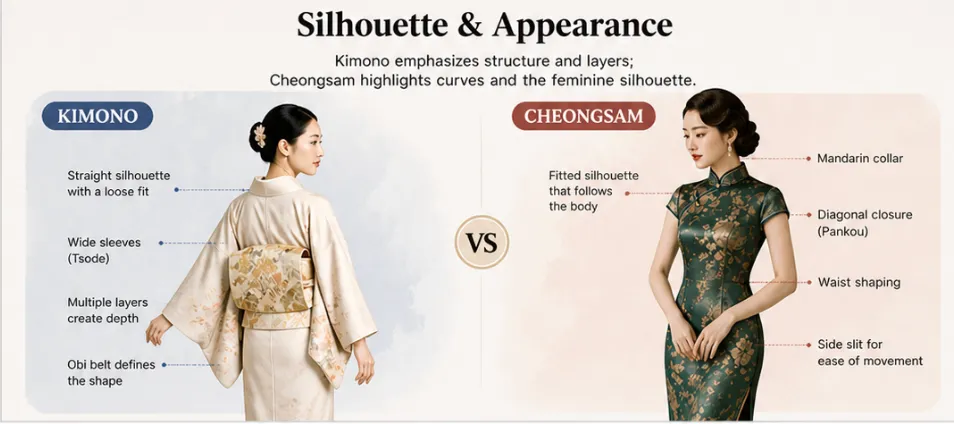
The kimono usually has a straight shape, a loose body, and a strong sense of layering. Its structure focuses on overall form and coverage rather than defining the waist. The qipao, by contrast, places more importance on body lines, often shaping the figure through a mandarin collar, a diagonal front closure, a fitted waist, and side slits.
This is the most visible difference between the two: the kimono feels more like a structured garment, while the qipao feels more like a tailored one. The kimono is about overall composition, while the qipao is about proportion and fit.
The details people most often confuse
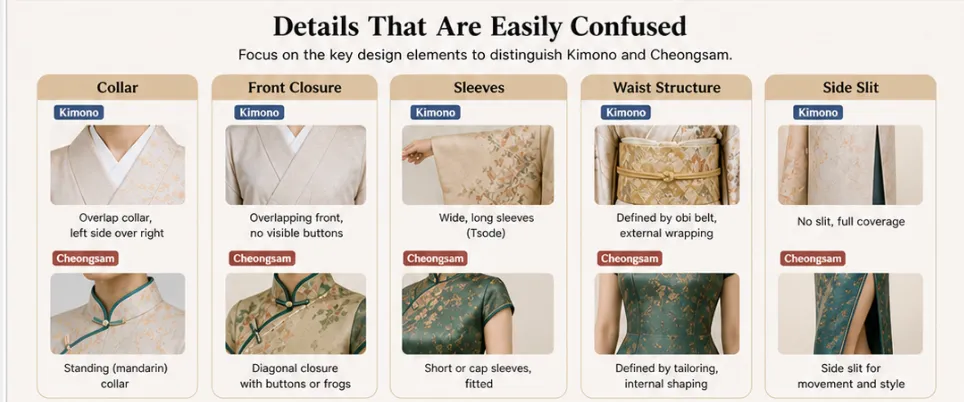
Many people use “long length,” “Eastern style,” or “formal appearance” as their main clues, but those are not enough to tell the two apart. The real differences are in the front closure, sleeve shape, and waist construction. A kimono is typically secured with overlapping front panels and an obi belt, while a qipao relies mainly on its cut and how closely it follows the body.
Kimono and Qipao: History, Culture, and Etiquette
The evolution of the kimono
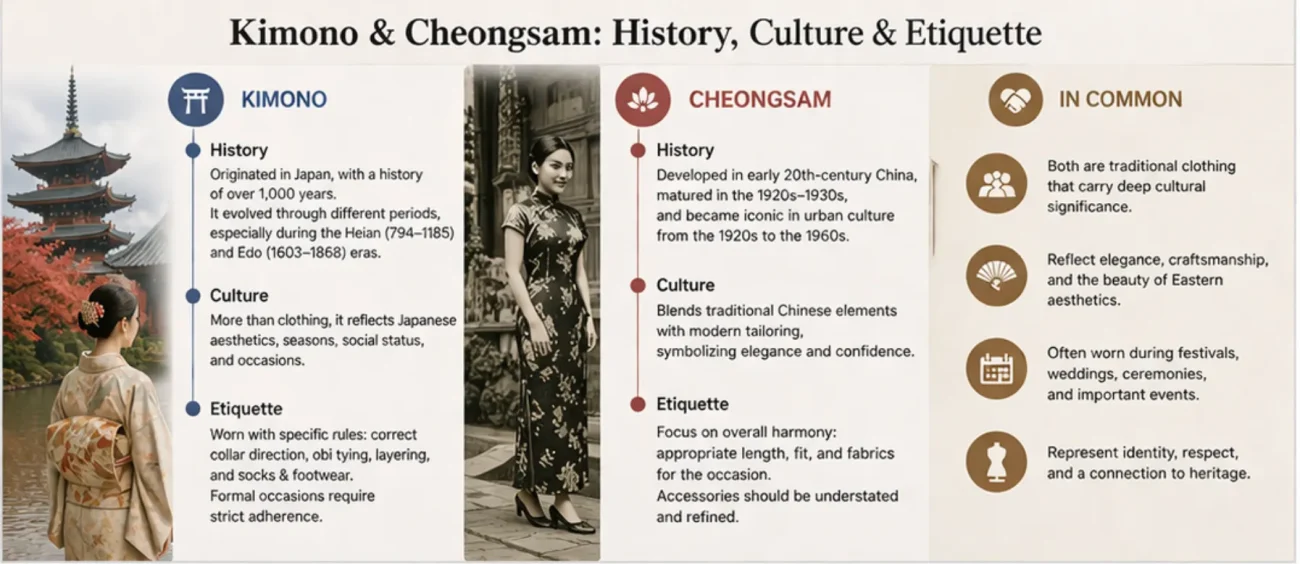
The kimono was not created in a single moment. It developed over a long period of time. Its history can be traced back to early Japanese clothing systems, and its form continued to change through the Nara, Heian, and medieval periods before taking on the traditional shape people know today.
In Japanese culture, the kimono is more than everyday clothing. It is also an expression of etiquette. Age, occasion, season, and social role can all affect the pattern, color, fabric, and way the garment is worn, which gives the kimono a strong cultural identity.
The development of the qipao
The modern qipao took shape during the 20th century. Most historical accounts agree that it matured during the 1920s and 1930s and became popular among a wider urban female audience. It preserved the reserved elegance of Eastern dress while adopting a more modern tailoring approach.
Today, the qipao can be worn as formal dress for festivals or special events, but it can also be adapted into more relaxed styling through updated designs. Its strength lies in the balance between tradition and practicality.
Dress etiquette
Kimono etiquette is highly detailed. The direction of the front panels, the placement of the obi belt, the inner layers, and even the coordination of socks and footwear all matter. In formal settings, whether the garment is worn correctly can directly affect how polished the overall look appears.
The qipao is not as complex, but it still requires good judgment about occasion and balance. A style that is too dramatic or accessories that are too heavy can distract from the qipao’s clean silhouette. A suitable length, fabric, and pair of shoes will make the look feel more natural and complete.
Why More People Tend to Choose the Qipao
A better fit for different body types
One of the qipao’s biggest strengths is that it is easier to match with different body shapes through its silhouette. Because it comes in different lengths, collar styles, levels of ease, and fabrics, the final effect can vary quite a lot. Rather than saying it suits only one body type, it is more accurate to say that it is easier to find the version that suits you.
Works naturally across more occasions
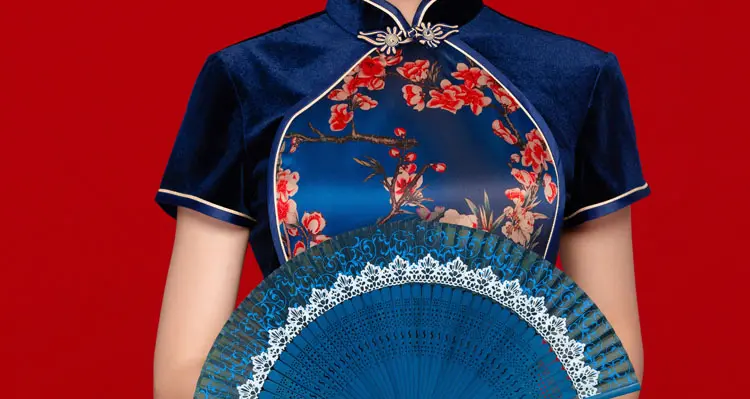
The qipao can appear at weddings, evening events, festivals, photo shoots, and cultural gatherings. Updated versions can also move into more relaxed settings. The kimono is beautiful as well, but its formality is stronger, which makes its range of use more defined.
Easier to wear
A kimono usually involves more steps, including securing layers and handling the obi belt. A qipao is more direct, and in many cases one piece is enough to complete the look. For someone trying this kind of clothing for the first time, the qipao usually has a lower barrier to entry.
Easier to care for
From a practical point of view, qipao styles are usually lighter and easier to store and maintain than kimono. The kimono is more closely tied to ceremonial and traditional use, so it requires more careful handling. The qipao is easier to keep in rotation and wear repeatedly.
Kimono & QipaoFAQ
Q: What is the main difference between a kimono and a qipao?
A: The main difference lies in cultural background, silhouette, and how each garment is worn. The kimono places more emphasis on tradition, layering, and formal etiquette, while the qipao focuses more on body lines and overall elegance. They both feel distinctly Eastern, but their design logic is completely different, so they should not be treated as interchangeable.
Q: What occasions is a qipao suitable for?
A: A qipao works well for many occasions, including holiday gatherings, weddings, evening events, photo shoots, and formal celebrations. When made with more refined fabrics and cuts, it can look elegant and polished. When styled in a more modern way, it can also blend into everyday wear.
Q: What should I pay attention to when buying my first qipao?
A: When buying your first qipao, focus on the silhouette, length, and fabric. The cut determines how it looks on the body, the length affects the overall feel, and the fabric influences both comfort and texture. Size charts are also important, especially for the shoulders, bust, and waist, so it is best to check those details before ordering.
Q: Can a kimono be worn as everyday clothing?
A: Yes, but it is usually not ideal for frequent everyday use. The kimono involves more dressing steps and has stricter etiquette requirements, so it is better suited to special events or formal occasions. If someone simply wants to experience the beauty of Eastern dress, they often start with styles that are easier to wear.
Q: How can I avoid confusing a kimono with a qipao?
A: The most direct way is to look at the structure. A kimono usually has wide sleeves, overlapping front panels, and an obi belt. A qipao is more fitted and typically features a mandarin collar, a diagonal front closure, and a slimmer silhouette. Once you focus on those details, the two are easy to tell apart.
References & Sources
-
- Kimono — Encyclopaedia Britannica.
- What is Cheongsam? About qipao dress
- Kimono — Victoria and Albert Museum.
- Kimono: Kyoto to Catwalk — Victoria and Albert Museum.
- Qipao — Encyclopaedia Britannica.
- Qipao vs Cheongsam
- Dress – Eastern, Cultural, History — Encyclopaedia Britannica.
- Cheongsam (1932) — The Metropolitan Museum of Art.
- Cheongsam (1930s) — The Metropolitan Museum of Art.
- Japanese Weddings in the Edo Period (1615–1868) — The Metropolitan Museum of Art.
- Netsuke: From Fashion Fobs to Coveted Collectibles — The Metropolitan Museum of Art.